
OEM vs. ODM Remote Control: A B2B Buyer‘s Guide for Smart Sourcing
If you are building your own brand of remote controls, choosing the right manufacturing partner is critical. The starting point of that decision is understanding the difference between OEM and ODM, OEM vs ODM remote control.
Although they look similar, these two models involve very different levels of investment, time, risk, and control.
What is OEM (Original Equipment Manufacturer)? – “You design, we produce”
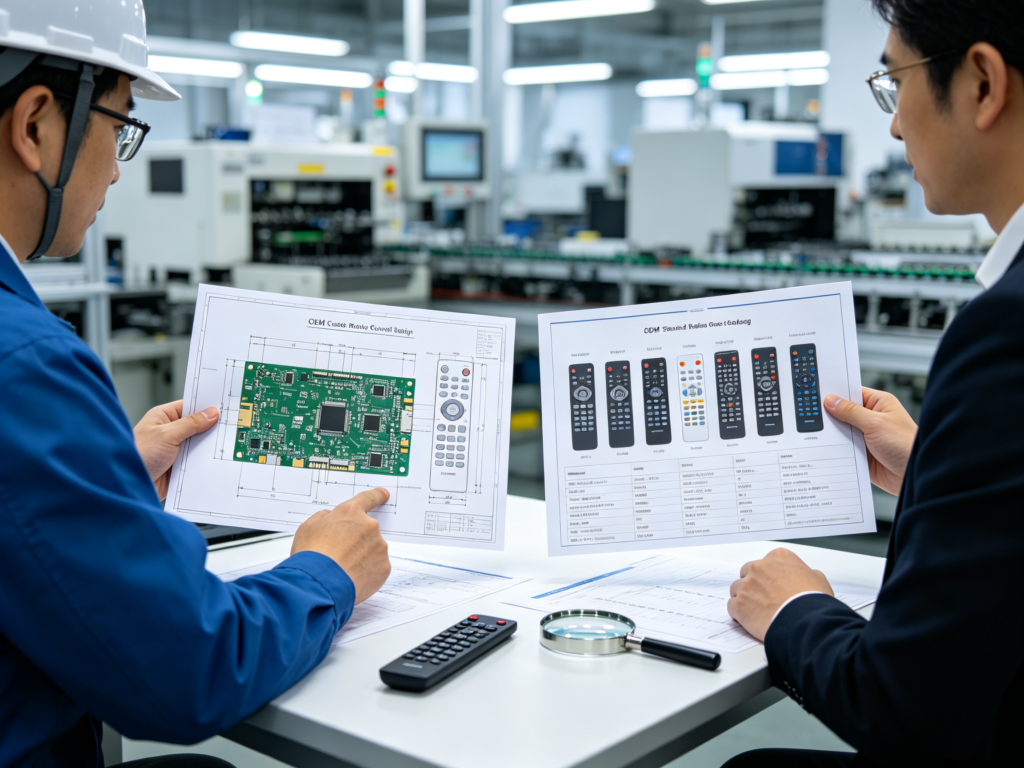
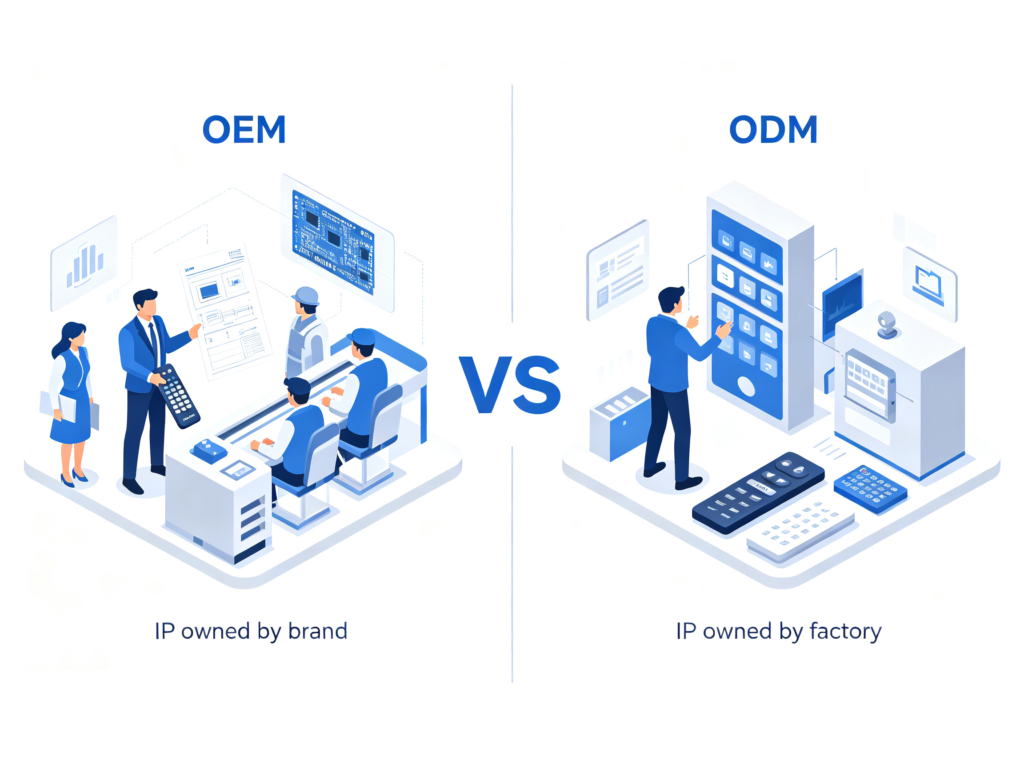
The brand provides complete design specifications, circuit layouts, software, and packaging. The factory follows those specifications exactly. The intellectual property (IP) belongs entirely to the brand, and the product can be highly differentiated. A classic example is Apple and Foxconn – Apple provides the technical requirements, and Foxconn executes production.
What is ODM (Original Design Manufacturer)? – “We design, you brand”
The factory offers a ready-made solution. The buyer can make small adjustments such as color, logo, and minor feature changes. The core IP typically belongs to the factory. This is common in industries like Bluetooth earphones – the ODM factory provides a standard platform with features like ANC, and the buyer selects color and logo for quick release.
Key Differences at a Glance
-
IP Ownership: OEM – brand owns the design; ODM – factory usually owns the design.
-
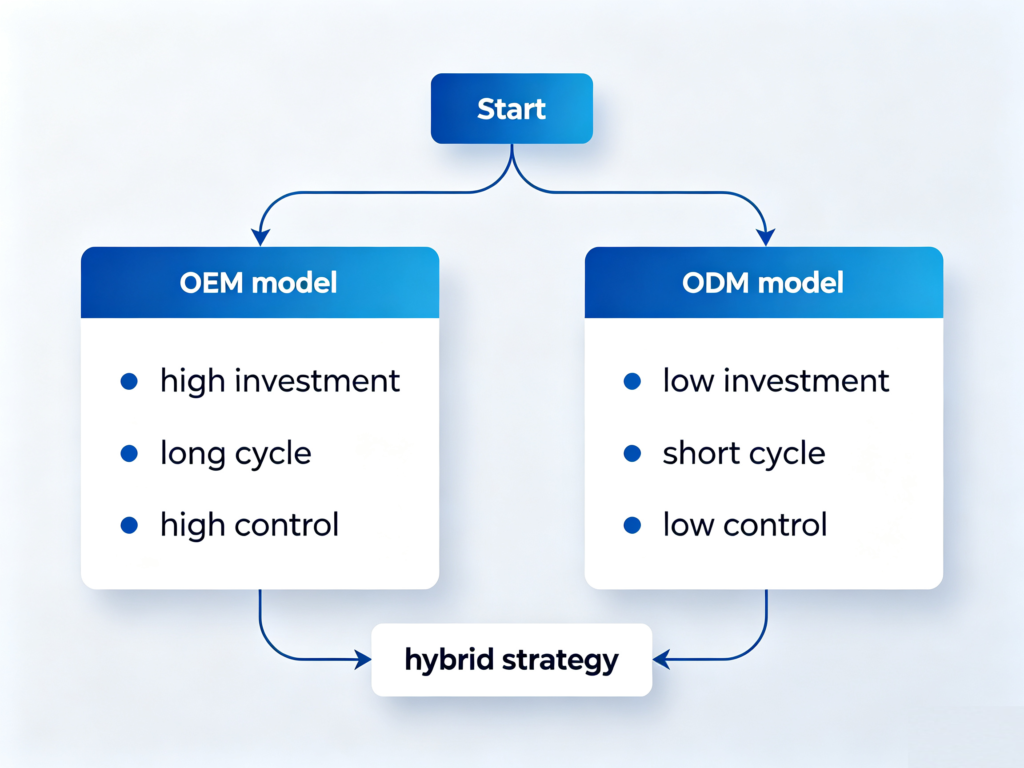
R&D Investment: OEM – high (design, tooling, prototyping); ODM – low (use existing solutions).
-
Time to Market: OEM – long (6–12 months); ODM – short (2–4 months, 50% faster).
-
Product Differentiation: OEM – high (full customization of look, functions, structure); ODM – limited (logo, color, minor adjustments).
-
Minimum Order Quantity (MOQ): OEM – higher (often 5,000+ units); ODM – more flexible (1,000–3,000 units or lower).
-
Quality Control: OEM – brand sets and audits standards; ODM – factory leads, brand oversees.
-
Certification Responsibility: OEM – brand leads and pays; ODM – factory may provide pre‑certified platforms.
Four Critical Decision Dimensions
1.IP and Product Lifecycle
With OEM, you keep the design IP and can upgrade, iterate, and maintain compatibility independently. With ODM, the factory usually owns the design, so future changes or improvements may depend on their cooperation.
Advice: If you plan to build a long‑term brand and continuously improve your products, OEM gives you full control. If you want to test the market quickly, ODM’s low entry barrier is attractive.
2.Total Cost of Ownership (TCO)
OEM has higher upfront costs – design, tooling, and certification. But once you scale, unit costs can drop. ODM has lower upfront costs but limited flexibility; deep modifications may incur extra fees.
Advice: Don’t compare unit price alone. Calculate total cost from design to mass production. ODM’s “low price” can come with hidden costs for future changes and the risk of homogeneity.
3.Speed to Market
ODM wins on speed – the product is already developed and validated. OEM requires a full cycle of design, prototyping, testing, and certification.
Advice: If you have a seasonal window (e.g., holiday promotions), ODM’s speed may be decisive. For a long‑term strategic product, investing extra months in OEM is worthwhile.
4.Product Differentiation and Brand Moat
OEM lets you control everything from PCB layout to wireless module and software stack. ODM is based on the factory’s existing platform – you can typically only adjust appearance, software layers, and some peripherals.
Advice: Homogeneity is a real risk with ODM – different brands may share the same mold and up to 70% of the same features. If your brand needs a unique selling point, OEM is essential.
So, Which One Should You Choose?
Choose OEM if:
-
You already have a mature brand and want to build a technical barrier.
-
You have an in‑house R&D team capable of providing full design specifications.
-
Your product requires high differentiation – you don’t want to look like competitors.
-
You are pursuing long‑term brand premium and customer loyalty.
-
Your order volumes are large enough to absorb upfront R&D and tooling costs.
Choose ODM if:
-
You are a startup or new to the remote control market.
-
You don’t have an in‑house design team.
-
You need to go to market quickly and test response.
-
Your budget is limited and cost‑sensitive.
-
Your product is a standard, general‑purpose remote control.
A Hybrid Approach (many successful brands use this):
Start with ODM for an entry‑level product to test the market. Once sales stabilize, move to OEM for a premium differentiated line. This balances speed with long‑term competitiveness.
Procurement Action Checklist
Once you decide on the model, follow these steps:
-
Issue a clear requirement document – specify usage scenarios, control distance, battery life, compatible device models, etc., so suppliers can’t quote low and add extras later.
-
Audit the factory – check production lines (SMT, injection molding, assembly), R&D team structure, and quality management systems (e.g., ISO9001).
-
Verify certifications – for exports to the EU, ensure RoHS/CE compliance; for the US, FCC.
-
Clarify contract terms – IP ownership, quality standards, exclusive rights, and after‑sales responsibilities.
-
Validate with samples – test small batches before mass production.
Final advice: There is no absolute “better” choice between OEM and ODM. The right model depends on your own R&D capabilities, budget, product positioning, and long‑term strategy. Knowing what you truly need is more important than the label.